Mombasa, Kenya — Impact Kwa Ground

Turning Coastal Plastic
Into Community Wealth

We intercept plastic before it reaches the Indian Ocean, converting it into eco-baskets and livelihoods for youth and women across Mombasa and Kilifi.

Scroll
120T Plastic generated daily in Mombasa
6T HDPE supplied monthly to recyclers
500+ Green jobs targeted annually
KES 2.5M Mombasa Plastics Prize — 2nd Place
Our Story

Born in Mombasa.
Built for its People.

Plastic Taka Creatives emerged from a clear and urgent observation: Mombasa's informal settlements generate approximately 120 tonnes of plastic waste every single day, yet less than 5 percent of it enters any formal recycling channel. The rest migrates through open drains and waterways into the Indian Ocean, degrading the coral reefs and mangrove forests that generations of coastal families depend on.

Founded by Kevin Ochieng and Francis Aute, Plastic Taka Creatives runs a community-centred buyback model: we pay waste collectors and households fairly for every kilogram they bring in, then process that plastic into high-density polyethylene for certified recyclers and extruded yarn for our women weavers. Nothing is wasted. The ocean is protected. The community earns.

We established our first collection point in August 2024, organised 14 women into the Eco-Action CBO by December 2025, and launched our first basket MVP through a yarn extrusion partnership with Jomo Kenyatta University of Agriculture and Technology in January 2026. We are early. We are deliberate. And we are scaling.

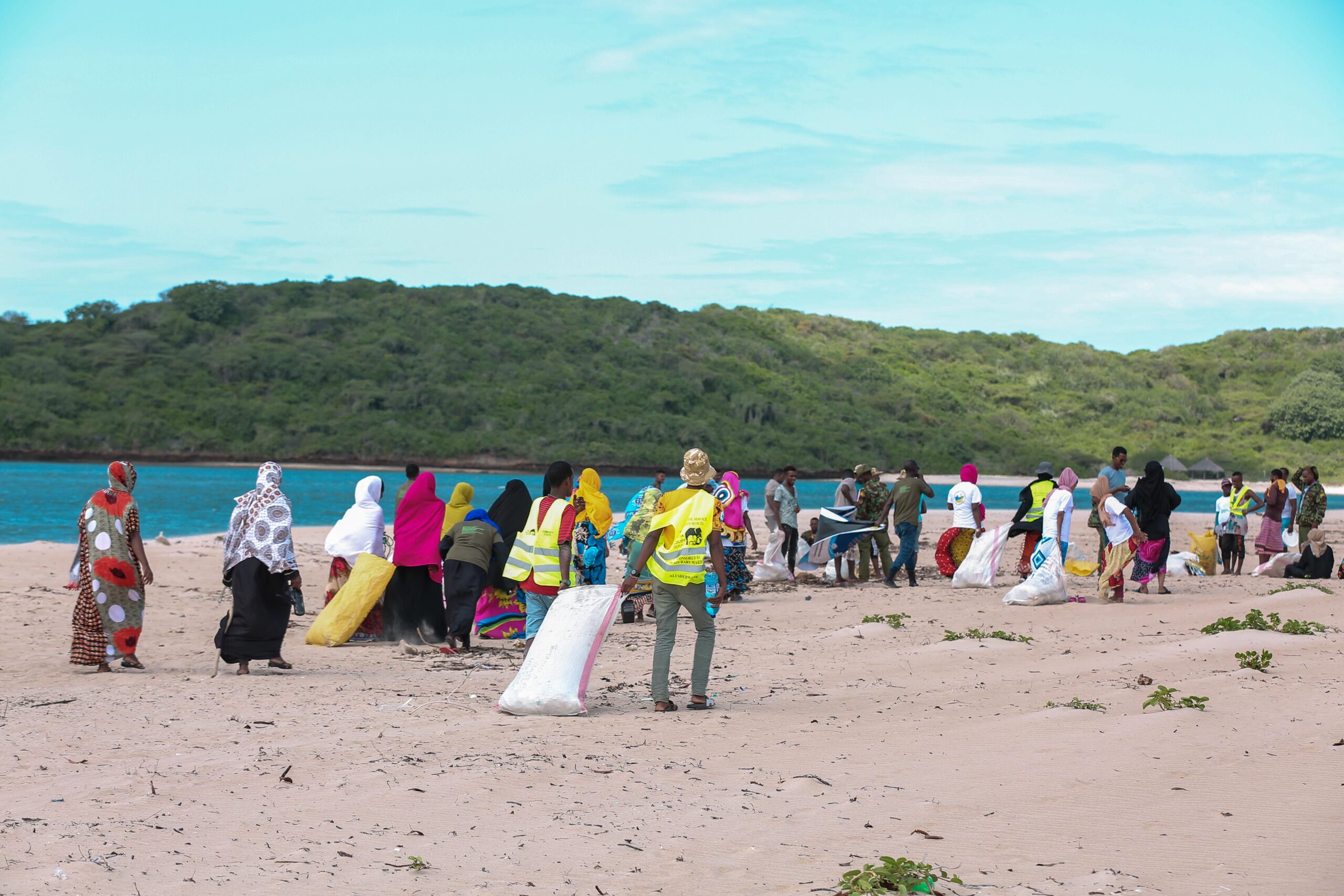
Plastic Taka Creatives community operations
Impact Kwa Ground
14 women in the Eco-Action CBO, trained in plastic yarn weaving
The Process

From Street to Shelf

Four linked steps transform plastic that would otherwise reach the Indian Ocean into verified economic value for waste collectors, weavers, and coastal communities.

01
Community Collection

Strategic buyback points in Kisauni, Jomvu, Likoni, and Nyali purchase plastic per kilogram directly from waste pickers and households at fair, transparent prices. Our tuk-tuk fleet conducts mobile collection runs throughout informal settlements.

02
Sort, Wash & Grade

Collected plastic is sorted by type, washed, and graded at our processing facility. High-density polyethylene (HDPE) is separated for direct supply to certified recyclers including Mr. Green Africa at 334 EUR per tonne. Remaining plastic goes to yarn production.

03
Extrude into Yarn

In partnership with Jomo Kenyatta University of Agriculture and Technology (JKUAT), shredded plastic is extruded through our industrial machine into durable weaving yarns. Each tonne of plastic produces enough yarn for hundreds of finished baskets.

04
Weave & Sell

The Eco-Action CBO—14 trained women weavers—hand-weave the yarn into fashionable eco-baskets retailing at 10 to 20 EUR. Sales flow through e-commerce, luxury retail partners, and trade shows, with 50 percent gross margins funding continued operations.

What We Produce

Three Revenue Streams,
One Ocean Protected

๐Ÿงบ

Eco-Baskets

Hand-woven by the Eco-Action CBO women from extruded plastic yarn, our baskets are fashionable, strong, and multi-purpose. Suitable for daily use and special occasions. Sold B2C to eco-conscious women aged 18 to 40 globally.

10–20 EUR per basket • 50% gross margin
โ™ป๏ธ

HDPE Supply

We supply certified recyclers including Mr. Green Africa and Jill Industries with sorted, washed high-density polyethylene. Current throughput is 6 tonnes per month with a target of 80 tonnes supplied in the June 2026 to March 2027 period.

334 EUR per tonne • 30% gross margin
๐ŸŒŠ

Plastic Credits

Verified collection volumes generate plastic credits under emerging ocean plastic offset standards. Projected at 83 credits for the first operating year, priced at 100 EUR per credit, these open a growing corporate sustainability market.

100 EUR per credit • 83 credits projected Year 1
Recognition

Validated by Peers.
Backed by Evidence.

๐Ÿ†
Mombasa Plastics Prize — 2nd Place

Selected from 57 youth innovators and 15 competing teams, Plastic Taka Creatives won KES 2.5 million through the USAID-funded Mombasa Plastics Prize, the flagship coastal innovation competition delivered by Challenge Works in collaboration with the Mombasa County Government, Close the Gap, and Swahilipot Hub.

2022–2023 • Challenge Works / USAID
๐ŸŒฑ
MPP Incubator Cohort

One of nine teams selected for the USAID-funded Mombasa Plastics Prize Incubator, a nine-month programme providing mentorship, investor access, and capacity building to transform prototypes into sustainable businesses. Showcased at the Enterprise Showcase at Sarova Whitesands in May 2024 alongside the Mombasa Deputy Governor.

Oct 2023–May 2024 • USAID / Mombasa County
๐ŸŽ“
beVisioneers Pioneer Grant Pitch

Presented as a finalist in the Mercedes-Benz beVisioneers Pioneer Grant Programme, pitching a 20,000 EUR raise to fund industrial extrusion equipment, two collection tuk-tuks, and basket production materials to scale from MVP to full commercial operations between June 2026 and March 2027.

May 2026 • Mercedes-Benz beVisioneers Fellowship
๐Ÿค
Mombasa County Government Partnership

Formally supported by the Mombasa County Government on compliance and operational integration within the county waste management framework. This county-level recognition provides regulatory grounding and positions the initiative as part of the official response to coastal plastic pollution in Kenya's premier port city.

Ongoing • Mombasa County Government
The People

Grounded Expertise.
Community Trust.

Our team combines climate finance strategy, engineering operations, community mobilisation, and lived experience of Mombasa coastal life.

Kevin Ochieng, CEO
Kevin Ochieng
Co-Founder & Chief Executive Officer

Two years in climate finance. Kevin leads strategic direction, financial management, and external partnerships, steering the initiative from prize-winning prototype toward scaled commercial operations across the Kenyan coast.

LinkedIn Profile
Francis Aute, Operations Manager
Francis Aute
Co-Founder & Operations Manager

Background in instrumentation and control engineering. Francis oversees collection logistics, recycler relationships, buyback centre operations, and the technical integrity of the extrusion process, ensuring every kilogram collected is properly accounted for.

LinkedIn Profile
Philomenah Muthoni
Philomenah Muthoni
Community Mobilisation Lead

Philomenah anchors the relationship between Plastic Taka Creatives and the waste collector communities across Mombasa's informal settlements, coordinating household engagement, weaver training, and the Eco-Action CBO operations.

Riziki Athuman
Riziki Athuman
Partnerships & Market Development

Riziki drives sales channel development, retail partnerships, and the e-commerce presence for the eco-basket product line, connecting Mombasa coastal craft to eco-conscious markets across East Africa and Europe.

Legal & Policy Grounding

We Do Not Operate in a Vacuum

Our work is explicitly aligned with Kenyan law, the African Union's binding development agenda, and the principal global frameworks on ocean health, climate, and community inclusion. Every tonne of plastic we intercept is a measurable contribution to the following instruments.

EMCA Cap. 387 — Section 63
Environmental Management and Coordination Act

Section 63 of EMCA prohibits the discharge of pollutants into Kenya's coastal and marine environment. Our buyback model directly intercepts plastic at source before it enters waterways, fulfilling the prevention mandate at community scale that formal government enforcement alone cannot achieve in informal settlements.

Gazette Notice No. 3596 — 2024
Extended Producer Responsibility (EPR) Regulations 2024

Kenya's EPR Regulations, gazetted in 2024, require producers and importers of plastic packaging to fund collection and recycling infrastructure. Plastic Taka Creatives provides a verified community-level collection node that brands can partner with to meet their EPR obligations, unlocking a new revenue stream beyond grant funding.

Mombasa County Act No. 3 — 2015
Mombasa County Solid Waste Management Act

The Act mandates integrated solid waste management across Mombasa County, including the formal integration of the informal waste sector. Our operations are conducted with county government compliance support and position us as an implementation partner for the county's official waste management and blue economy objectives.

Kenya Vision 2030 — Blue Economy Pillar
Kenya National Blue Economy Strategy

Kenya targets a 40 percent reduction in coastal plastic pollution and the creation of 250,000 blue economy jobs by 2030. Plastic Taka Creatives advances both objectives directly: intercepting ocean-bound plastic while generating dignified, formally documented employment for coastal youth and women in Mombasa's informal settlements.

AU Agenda 2063 — Aspiration 1, Goal 1
A Prosperous Africa Based on Inclusive Growth

Aspiration 1 of Agenda 2063 calls for high standards of living and quality of life for all Africans, with a focus on eradicating poverty and transforming African economies. Our verified employment model creates measurable income increases for women and youth in informal settlements, directly advancing Goal 1's target of eliminating extreme poverty by 2030.

AU Agenda 2063 — Aspiration 6, Goal 24
An Africa Whose Development is People-Driven

Goal 24 of Aspiration 6 emphasises active citizen participation in governance and development, with specific focus on youth and women. Our CBO governance model, which places Eco-Action women weavers as decision-makers in production and revenue distribution, embodies this aspiration at the most local and accountable scale possible.

AU Agenda 2063 — Aspiration 7, Goal 27
Environmentally Sustainable and Climate-Resilient Economies

Goal 27 calls on African states to achieve environmentally sustainable and climate-resilient economies and communities through the adoption of sustainable consumption and production patterns. Our circular economy model converts waste into revenue, demonstrating that ecological protection and economic growth are not competing objectives on the African continent.

AU Agenda 2063 — Aspiration 1, Goal 5
Modern Agriculture and Blue and Green Economies

Goal 5 targets the development of Africa's blue economy as a driver of continental growth. The Indian Ocean's coral reef and mangrove systems are foundational to coastal fisheries that sustain millions of East African livelihoods. Intercepting plastic before it reaches these ecosystems is not environmental charity—it is blue economy investment.

SDG 14 — Target 14.1
Life Below Water

Target 14.1 commits signatory states to preventing and significantly reducing marine pollution of all kinds, particularly from land-based activities, by 2025. Over 80 percent of ocean plastic originates from coastal land-based sources. Our community buyback model is a verified implementation mechanism for this target at the level where land meets sea in informal settlement drainage corridors.

SDG 1 & SDG 8 — Targets 1.1, 8.3, 8.5
No Poverty & Decent Work

Targets 8.3 and 8.5 promote decent work, entrepreneurship, and productive employment for all, including women and youth. Our verified payment system documents income levels, gender disaggregation, and employment conditions, creating the audit trail needed to demonstrate SDG contribution at enterprise level to impact investors.

SDG 12 — Target 12.5
Responsible Consumption and Production

Target 12.5 calls for substantial reduction of waste generation through prevention, reduction, recycling, and reuse by 2030. Our model closes the loop on plastic that formal systems have failed to capture for decades, demonstrating that community-centred circular economy approaches can deliver measurable progress where municipal collection infrastructure remains insufficient.

SDG 5 & SDG 10
Gender Equality & Reduced Inequalities

We target a minimum of 70 percent women participation across the collector and weaver workforce, ensuring that women gain documented economic agency rather than remaining invisible contributors to informal recycling systems. The Eco-Action CBO structure provides collective bargaining and ownership mechanisms unavailable to individual waste pickers.

Paris Agreement — Article 2.1(b)
Climate Finance Flows

Article 2.1(b) of the Paris Agreement calls for making finance flows consistent with a pathway toward low-GHG and climate-resilient development. Our plastic credit mechanism connects community-level ocean plastic interception to verified climate finance, demonstrating the type of blended instrument Paris envisioned but rarely delivers at community scale.

Paris Agreement — Article 4 & Kenya NDC
Nationally Determined Contributions

Kenya's updated NDC submitted to the UNFCCC includes coastal ecosystem protection and marine pollution reduction as adaptation co-benefits. Our operations in Mombasa County provide measurable, verifiable progress toward these coastal adaptation commitments, positioning Plastic Taka Creatives as a documented NDC implementation partner at county level.

UNEA Resolution 5/14 — 2022
End Plastic Pollution: A Global Treaty

The UN Environment Assembly Resolution 5/14, adopted in Nairobi in March 2022, mandated negotiations for a legally binding global plastics treaty by 2024. The treaty's provisions on land-based marine plastic pollution and on extended producer responsibility create formal institutional backing for community buyback models like ours as part of national implementation frameworks.

UNFCCC — Warsaw Mechanism & Loss and Damage
Loss and Damage & Coastal Communities

The Warsaw International Mechanism on Loss and Damage and the Sharm el-Sheikh Fund operationalised at COP27 specifically recognise coastal communities as among the most climate-vulnerable populations. Our model inverts the loss narrative: rather than waiting for compensation after damage, we pay communities to prevent ecological degradation, making protection economically preferable to inaction.

Nairobi Convention — Article 4
Convention for the Protection of the Western Indian Ocean

Article 4 of the Nairobi Convention obligates contracting parties to take all appropriate measures to prevent, reduce, and combat pollution of the Western Indian Ocean region from any source. Kenya is a signatory. Our verified community collection operations in Mombasa and Kilifi Counties constitute direct, measurable action under Kenya's Nairobi Convention obligations at the land-sea interface.

Nairobi Convention — LBS Protocol
Protocol on Land-Based Sources of Marine Pollution

The Land-Based Sources Protocol specifically addresses the drainage and runoff pathways through which plastic from informal settlements enters coastal waters. Our buyback centres are positioned precisely at these pathways in Kisauni, Jomvu, Likoni, and Nyali, intercepting plastic at the point where the protocol demands action.

UNCLOS — Article 194
UN Convention on the Law of the Sea

UNCLOS Article 194 requires states to take all measures necessary to prevent, reduce, and control pollution of the marine environment from any source, using the best practicable means at their disposal. Community-based collection, being the most cost-effective and contextually appropriate means available in informal coastal settlements, satisfies this obligation where formal infrastructure does not exist.

IUCN — Marine Protected Areas Framework
Coral Reef and Mangrove Protection

The International Union for Conservation of Nature classifies plastic pollution as a primary stressor on coral reef and mangrove ecosystems in the Western Indian Ocean. Our partnership with Kenya Marine and Fisheries Research Institute for marine baseline surveys connects our operational data to IUCN's global reef monitoring network, enabling science-backed verification of habitat improvement.

Kenya Constitution 2010 — Article 43
Right to a Clean and Healthy Environment

Article 43 of Kenya's 2010 Constitution guarantees every person the right to a clean and healthy environment, including the right to have the environment protected for the benefit of present and future generations. Our work in Mombasa informal settlements delivers this constitutional right to communities who have historically been last in line for environmental protection.

Kenya Constitution 2010 — Article 56
Minorities and Marginalised Groups

Article 56 obligates the state to put in place affirmative action programmes for minorities and marginalised groups, including women and urban informal settlement residents. Our minimum 70 percent women participation target and priority hiring from within Mombasa informal settlements align explicitly with this constitutional affirmative action mandate.

ILO Decent Work Agenda — C189
Domestic Workers and Informal Sector Rights

The International Labour Organization's Decent Work Agenda and Convention C189 establish core standards for workers in informal and domestic sectors, including fair wages, safe conditions, and protection from exploitation. Our digital payment system, which pays collectors within 24 hours at transparent, published rates, operationalises these standards in a sector where exploitation has been the norm.

AU — Agenda 2063 Aspiration 6, Goal 23
Capable Institutions and Transformative Leadership

Goal 23 of Agenda 2063 calls for engaged and empowered citizens as drivers of continental transformation. The Eco-Action CBO governance model, where women weavers hold membership, make production decisions, and share in revenue, creates exactly the kind of locally owned institution the AU identifies as foundational to long-term sustainable development.

Get In Touch

We Are Based in Mombasa.
Our Doors Are Open.

๐Ÿ“
Location
Mombasa County, Kenya
Operating across Kisauni, Jomvu, Likoni & Nyali
๐Ÿ“ž
Phone
+254 719 543 927
+254 717 400 827
โœ‰๏ธ
Email
plastictaka@gmail.com
๐ŸŒ
Social Media
@PlasticTakaCreatives
Partner With Us

The Ocean Cannot Wait.
Neither Can We.

We are actively seeking partnerships with impact investors, corporate EPR compliance programmes, recycling industry players, conservation funders, and county and national government agencies. If you purchase plastic, fund sustainability, or care about the Indian Ocean, there is a role for you here.